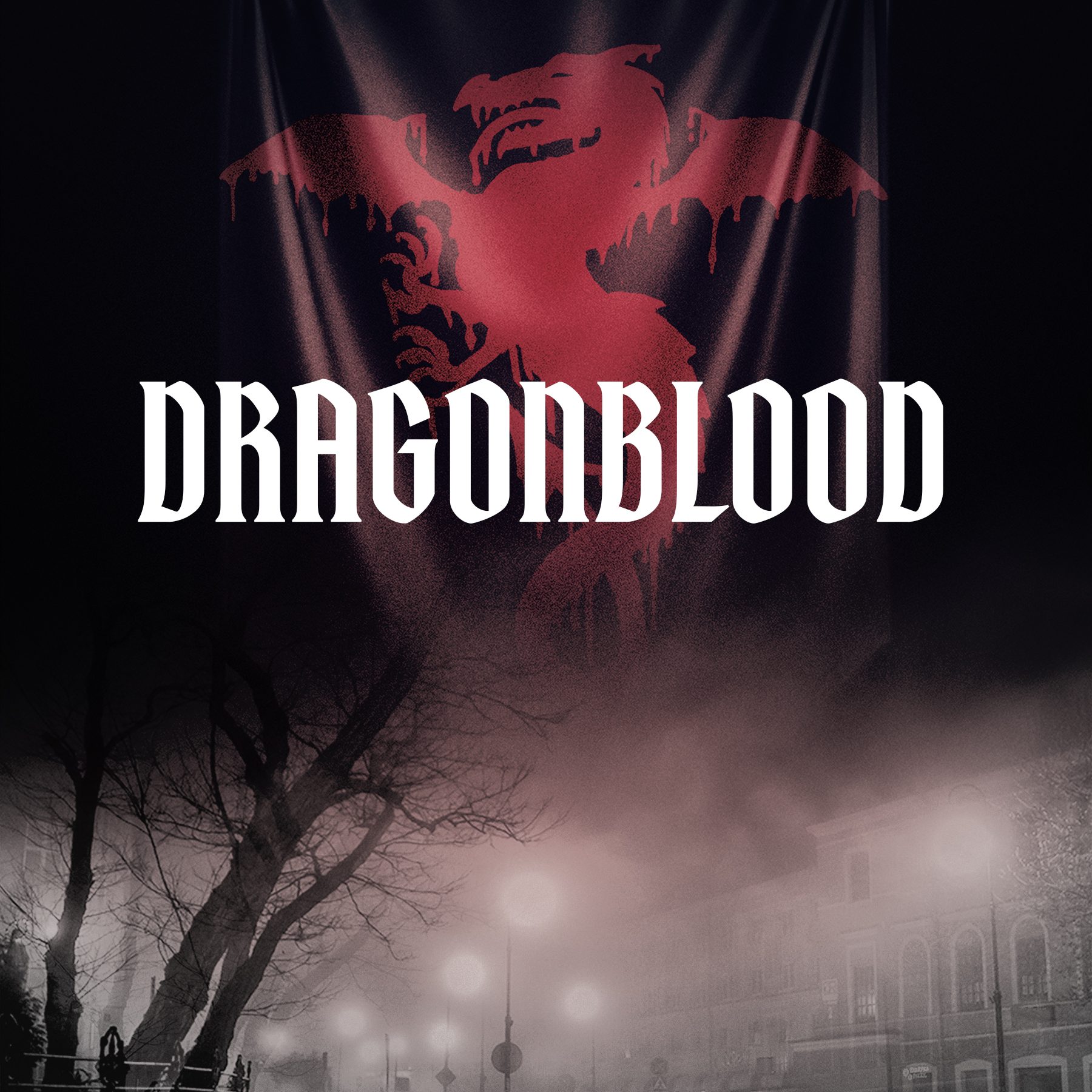
Chapter 1(WIP)
I. Letter to Isaac Van Helsing from Abraham Van Helsing
3 December, 1898. Amsterdam
My dearest brother,
I congratulate you on your marriage. I will confide to you that I was at first shocked, but if you are happy, I am happy for you. I know you to be an honourable man, and your bride must therefore merit all honour herself. I hope to meet her soon, and in time, your baby girl. As I have no heirs of my own, I shall amend my will so that you and yours will not want when I meet the great inevitability.
Regarding your other request—you know that I do not advise any you choose any course that brings you nearer this mystery. It has been my policy to avoid meddling in the affairs of The Otherworlders, but I will not deny that my study of these creatures has continued. If it is your desire to know of them, then I will acquaint you with my researches, but I caution you not to treat them as doctrinal—they are personal observations. I have been wrong about many of my assumptions.
You will, of course, forgive me for laying them out in academic form. You are a lawyer, and I am a professor, so I think this form will be pleasing to both of us. It will never be a complete accounting, but I have made it with as much humility and honesty as I possess.
The Vampire Species
There are many names for what I have designated homo sanguis—vampire, lamia, vrykolakas—among dozens of others. My own experience of him is limited to the European species, but it is my belief that there are manifestations in all corners of human existence. Every society claims a cannibal myth of their own from the Far East to the wilds of Africa. Even the Americas have their own pre-colonial monsters—see the Cree Witiko or the Inuit Atshen.
Physical Anthropology
The vampire ages not, but he must needs protect his immortality, as he is still subject to death. He is nearly impervious to harm when he is abroad at night at his full strength, but he must drink a continual supply of human blood to maintain his youth. This does not require him to necessarily kill his victims, but he must either find compliant prey, or disguise his predations, as he has not power to hypnotize as has been previously implied.
Typically, his vampiric nature will only be evident by his pallor, his subtly-pointed fingernails, and the sharpness of his canines when he chances to reveal them from behind his lips. These fangs are subtle, noticeably pointed but not so exceptional as to excite mention. When he becomes aroused by bloodlust or angered by some threat, a kind of tumescence occurs in the gum, causing the canine teeth to lengthen, which gives him an undeniably monstrous appearance.
His eyes will appear as normal, but like cats and other night predators, he has a tapetum lucidum that causes his pupils to illuminate red if light shines upon them. His eyes may also occasionally reflect points of red. I believe this results from a high red blood cell content in his corneal hydration, which thickens when he is enraged or ravenous. His physical strength is hardly to be calculated. Using only his hands, he can quarter a man with the ease of a child tearing a cloth doll. His uncanny speed also defies description. A bullet could perhaps match him, but this requires further investigation.
Vital Needs
Without fresh blood and restorative sleep, his predatory traits become much more conspicuous. He must rest in the day if he is to suppress the appearance of monstrosity and maintain his strength, or else he becomes gaunt and aged. He has the ability to walk in the daylight, but prolonged exposure weakens him and reduces him to the capacities of a physically powerful human man. He is most vulnerable once he chooses to enter daytime slumber, becoming as helpless and inert as the dead, only waking after dusk. Only in this sleep does his flesh become penetrable, and his body susceptible to damage. He must therefore make a safe haven for himself in the form of a secure tomb in deep places that are inaccessible to mortals. Man’s exploratory instinct has made these increasingly difficult for him to secure, so he must have multiple tombs hidden around in caves, abandoned mine shafts, or in vaults built to withstand all attempts at entry.
The Vampire’s Death
The mechanism of his demise is unclear. That he may be de-corporated is evident, but only through extremely destructive methods—incinerating fire, explosive force or complete dismemberment. Only explosives and bullets have enough physical power to harm him when he walks the night, and even then he heals quickly. Damage to his heart may temporarily paralyze him, as the heart conveys the animating blood to the rest of his body. This, I believe, is why a stake through the heart is so strongly advocated by the old texts and burial customs.
He may be immobilized by decapitation when in his death-sleep, but this is not enough to end him if there is another means by which his head may be returned to his body. If a vampire has been butchered thus, his body will eventually starve for lack of nourishment, then desiccate beyond regeneration—or so I believe. A vampire in this state may be revived with a transfusion of blood, but I have neither the means nor the inclination to test it.
Procreation
The making of the vampire is an uncomplicated, if disturbing process. If a human consumes some of the vampire’s blood, the infection will live in them and imprint on their regenerative cells so that when human death comes to them, they will revert to the age they received their contamination. You know that I witnessed Dracula force the sanguis baptismatis upon Mrs. Harker, so I need not remind you that a human’s consent is unnecessary if the vampire chooses to forgo it. It is possible that contamination may occur if a sleeping vampire is injured and his blood consumed, but this is untested and should remain so.
I do not know what relation the vampire has to his progeny. I believe there are subtle psychic links between those of common bloodlines, but their familial inclinations are variable and unpredictable. They are not compelled by instinct to care for their own children as other creatures are, but neither are they indifferent. Their companions are generally made by choice, and so perhaps their bonds are just as strong. They may endure many centuries and still have regard for each other—something I learned late, to my misfortune and shame.
The Nature of the Vampire
The vampire is not of uniform personality, nor subject to deterministic atavism. There are traits and fetishes that maybe be heritable within his bloodlines, but I hesitate to draw any moral equivalencies with the vampire’s natural, scientific behaviours. I believe any moral decay sustained by these creatures are a function of their formerly-human egos. Their caprice, cruelty or indifference to the suffering they cause are amplifications of the same human folly that afflicts us. Isaac, take heed of this because I want it understood—I have taken part in the killing of four of these creatures, and did so without first proving any moral necessity. I have no evidence of devilry or demonic possession, or any other indicator that their souls were compromised or unpleasing to the Almighty. When I look on the spectrum of human sin, I don’t see any unique or surpassing reason why we ought to pass greater judgement on the vampire than we do on the tigers of India. The nature of the thing is to hunt, something as much in our own nature as any in other predator.
Vlad III Dracula
I come now to Prince Vlad the Third. Called Dracula in his own tongue in reference to his father Vlad Dracul “Dragon”, member of Emperor Sigismund’s Order of Dragonists. Dracul may also stand for Devil in Romanian, which has naturally fuelled his legend. In his own time he was also called Țepeș—the Impaler—because of his fondness for transfixing both his enemies and victims of his caprice upon long wooden stakes.
Vlad Dracula was born into a bloody world sometime near 1430, and proceeded to make it bloodier. Prior to his entre into the fray, he was a hostage of the Sultan against his father’s good behaviour, educated alongside the future Mehmed II, later to be known as the Conqueror for his capture of Constantinople. After his release, Vlad was given an Ottoman army with which to invade the province of Wallachia. He was a talented warlord whose primary objective was to claim and hold the Wallachian throne. He wanted to establish a permanent dynasty there, but he had clever enemies as well as treacherous allies—whom he himself frequently betrayed.
His penchant for displays of torture was not unique among his contemporaries, but his use of it both as a psychological weapon against his enemies and his subordinates was exceptional enough to hear tell of across the whole of Europe. I do not, however, think he is an exception to history. Should we resurrect Genghis Khan or Cesare Borgia and grant them immortality, I doubt that we would find our ambitious new vampire any less sensual or bloodthirsty.
You will have read Mr. Stoker’s book by now—an almost entirely fictional account rendered as to both conceal and allude to certain facts. I have told you that Mr. Stoker’s original commission was to write an academic monograph detailing Dracula’s corruption, blood thirst and the many depositions from the Wallachian throne, and that his departure to fictional narrative was not authorized. In fact, Lord Godalming commissioned this propaganda in order to taint his rival’s heraldry and make Vlad Dracula’s acceptance into the peerage unattractive to the British crown. It was always a rather desperate proposition. Forced to shed his Dracula cognomen, Vlad has cleverly borrowed another of his own family names to create his British alias. He can in fact claim relation to the present royal family, though he must fabricate generations of ancestors to demonstrate it. Money and an eager new ascendant to the throne will undoubtedly decide the issue in his favour.
He does not seek authority, but legitimacy. At present, he puts his energies and investments into the manufacture of arms, especially in procuring raw materials. He understands and delights in war, feeding on it as he feeds on blood. He continues to prosecute vendettas of his own under the cover of war’s chaos, though it is difficult to track his exploits against the Ottoman royal family, given all of their present troubles.
Know this, because it departs from the novel that ultimately resulted from our adventure—Vlad Dracula is, at essence, of his humanity. He is subtle, intelligent, egoistic, and exquisitely cruel, but he is not mindless nor crude. He is rarely impulsive, and while his emotional states are opaque, he does have some regard for those he chooses for his companions. Those dear to him are not chosen as a likeness, but for qualities known only to himself. He does not imbue them with his nature or his crimes. My failure to understand this represents the crowning regret of my life.
This acknowledged, Vlad Dracula is—as he was when he himself lived—a connoisseur of death. He is sophisticated enough to grasp the reins of modern power and position himself in society, but he will never entirely leave his own time, nor leave behind his old habits. Earlier, I likened vampires to the tigers of India—this one is a man eater, and must one day be dealt with. I do not know by whose hand this will be done, but whomever accepts the burden of this task must be uncommonly clever and cautious if they are to succeed.
It is my dearest wish to protect you and your new family from ever crossing Dracula’s path, so I beg that you will remain in the Antilles until matters have stabilized. He will never forgive our crimes against his house, but thanks to the unwanted publicity of Stoker’s marvellous novel, he may be satisfied to allow us to live out our natural lives. Those of us, at least, he elected to spare. Mrs. Harker will have her own experiments to conduct when she begins her second life in the darkness. It is for her sake that I seek to reconcile these ideas, because I do not want to judge or do harm any more to these creatures when they have offered me no harm in the first instance. I beg you—witness my mistakes, and do not repeat them.
Your humble servant and loving brother,
Abraham Van Helsing
